For many Americans living on a fixed income, every extra dollar matters. Higher grocery bills, rising rent, expensive utility costs, and healthcare expenses have stretched household budgets across the country. So when the Social Security Administration announced a Cost-of-Living Adjustment (COLA) for 2026, many recipients welcomed the increase.
But there is something that doesn’t get nearly as much attention.
Every year, thousands of SSI recipients experience payment reductions, benefit suspensions, overpayment notices, or eligibility reviews. In many cases, it has nothing to do with fraud or intentional mistakes. Sometimes it happens because a person forgot to report a change, received unexpected financial help from family, or accidentally exceeded resource limits.
That is why the real SSI benefits warning 2026 is not about the payment increase itself. The bigger concern is understanding the rules that continue to affect eligibility after the increase arrives.
If you currently receive SSI benefits or plan to apply soon, this guide explains what has changed, what risks to watch for, and what steps can help protect your monthly payments throughout 2026.
SSI Benefits Warning 2026: Quick Summary
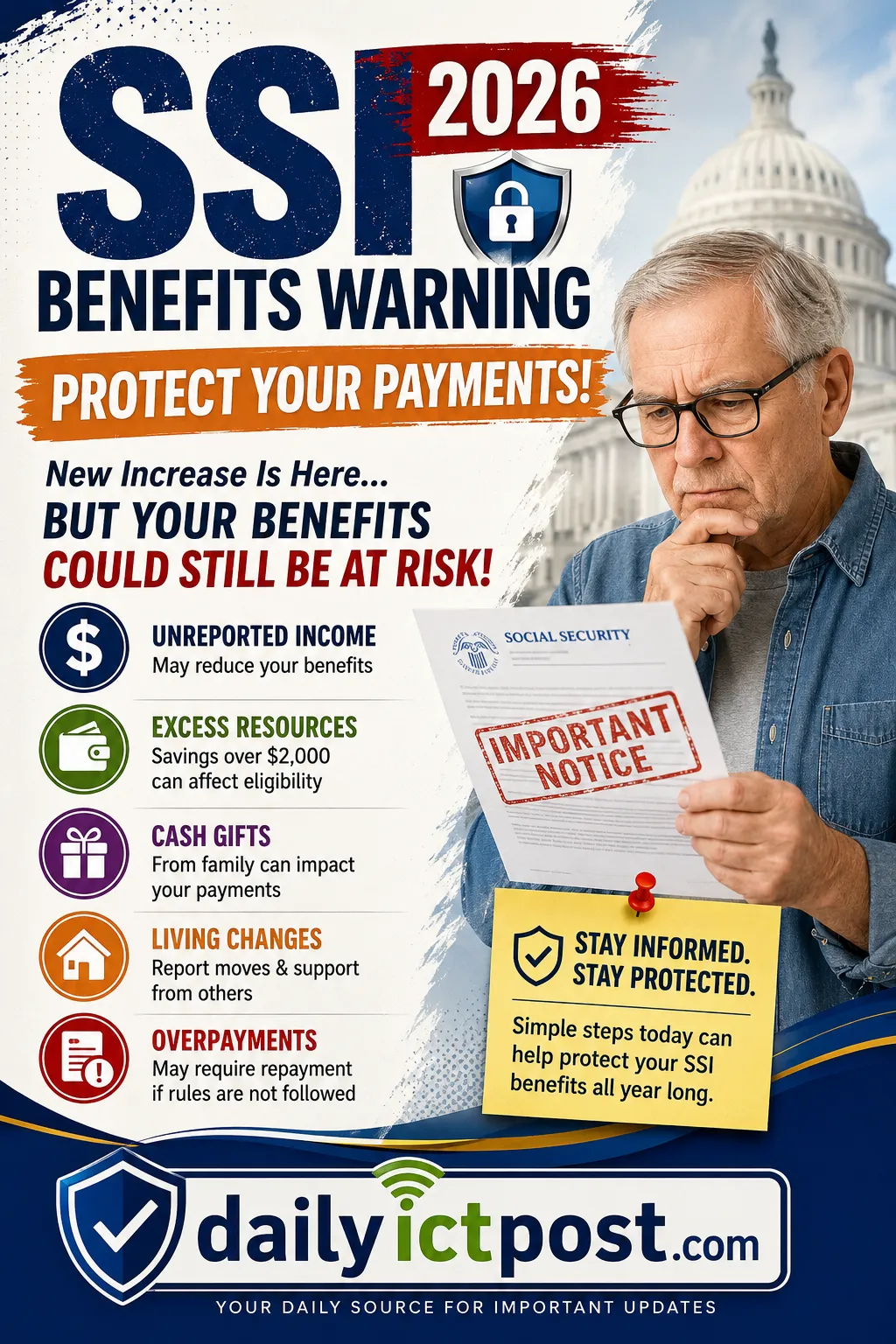
Before reading the full guide, here are the biggest SSI risks in 2026:
Unreported income can reduce benefits
Savings over $2,000 may affect eligibility
Cash gifts from family can impact payments
Living arrangement changes must be reported
Overpayments may require repayment
Read below for complete details and protection tips.
Who This Guide Is For?
This guide may be helpful if:
You currently receive SSI
You recently applied for SSI
You receive help from family members
You have savings close to SSI limits
You work part-time while receiving benefits
You received an SSI review notice
About This Guide:
This guide was researched using publicly available information from the Social Security Administration (SSA), federal SSI regulations, and recent COLA updates. It is designed to help SSI recipients understand common benefit risks and reporting responsibilities in plain English.
Editorial & Legal Disclaimer
This article is intended for informational and educational purposes only.
It is not legal, tax, financial, or benefits advice. SSI rules may change, and individual situations vary significantly.
Always verify eligibility, payment amounts, reporting obligations, and appeal rights directly with the Social Security Administration (SSA) or a qualified benefits representative before making decisions that may affect your benefits.
SSI Benefits Warning 2026: The Mistakes That Could Cost You Your Check
Quick Timeline: SSI Benefits Warning 2026 at a Glance
Key Risk
Why It Matters
Unreported Income
May reduce benefits
Excess Resources
Can affect eligibility
Cash Gifts
May impact payment amount
Living Arrangement Changes
Must often be reported
Overpayments
May require repayment
What Changed for SSI Recipients in 2026?
The biggest update for most recipients is the annual Cost-of-Living Adjustment.
The adjustment helps benefits keep pace with inflation and rising consumer costs. While an increase is certainly good news, it is important to understand that the higher payment amount does not automatically mean every recipient will receive the same increase.
Your actual SSI payment depends on several factors, including:
Your income
Your living arrangement
State supplemental payments
Financial support received from others
Marital status
Work activity
For some households, the increase may be noticeable. For others, additional income or changes in circumstances could reduce the amount they ultimately receive.
These figures represent maximum federal payments. Many recipients receive lower amounts depending on their situation.
Why Some People Could Lose Benefits Even After the Increase
This is where many recipients get caught off guard.
People often assume that once they qualify for SSI, their payments will continue unchanged unless they voluntarily leave the program.
That is not how SSI works.
SSI is a needs-based program. Eligibility is continuously reviewed. Changes in income, assets, or living arrangements can affect both eligibility and payment amounts.
Imagine this situation.
A grandmother receives SSI and lives alone. During the year, her daughter begins helping with rent and groceries.
From the family’s perspective, this seems harmless. From an SSI perspective, however, that assistance may affect benefit calculations because support received from others can sometimes count toward eligibility rules.
This is one reason recipients should never assume that financial changes are too small to matter.
Some recipients assume government letters are routine and can wait.
That mistake can become expensive.
Many notices contain requests for documents, income verification, eligibility reviews, or updates that require a response.
Missing a deadline can create unnecessary problems that are often easier to prevent than fix.
Forgetting About Resource Limits
One of the most overlooked SSI rules involves assets and savings.
Even though payment amounts increased, resource limits remain extremely restrictive.
Expert Insight: Most SSI payment interruptions are not caused by fraud. They often happen because recipients misunderstand reporting requirements or miss review notices.
Resource Limits Continue to Be a Major Risk
Most of the Americans focus entirely on monthly income.
However, SSI also has strict resource limits.
SSI Resource Limits
Applicant Type
Resource Limit
Individual
$2,000
Couple
$3,000
Resources can include:
Cash
Savings accounts
Stocks
Certain investments
Some property interests
A surprising number of recipients accidentally exceed these limits.
Common examples include:
Receiving an inheritance
Receiving insurance proceeds
Holding large tax refunds
Keeping excess money in a bank account
Receiving legal settlement funds
Even temporary increases can create eligibility concerns.
For this reason, financial awareness is just as important as income reporting.
Real Situations That Trigger SSI Problems
An SSI recipient receives a $4,500 inheritance from a relative. The money sits in their savings account for several months and pushes resources above the SSI limit. SSA later reviews the account and eligibility issues arise.
A part-time worker earns extra holiday income but forgets to report wages immediately. Months later, SSA recalculates benefits and issues an overpayment notice.
Overpayment notices often happen because of unreported income, living arrangement changes, resource limit issues, or record errors.
If you receive a notice, you may have several options:
Request an SSA repayment plan if you cannot repay the full amount at once.
Submit a waiver request if the overpayment was not your fault and repayment would cause financial hardship.
File a reconsideration if you believe the overpayment amount is wrong.
SSI recipients also have important appeal rights. Acting quickly is important because appeal and reconsideration requests usually have strict deadlines.
For SSI overpayment help, SSA repayment options, and SSI appeal rights, review the instructions included with your notice or contact Social Security immediately through SSA Overpayment Information.
How To Request An SSI Appeal
If your SSI application is denied or your benefits are reduced, you can file an appeal with the Social Security Administration.
Most appeals must be submitted within 60 days of receiving the decision notice. Missing the deadline may affect your appeal rights.
You can request an appeal online through SSA Appeal A Decision Page or contact your local Social Security office.
Before filing, gather supporting documents such as medical records, income information, or any evidence that supports your case.
Filing quickly and providing complete information can help prevent unnecessary delays.
What Assets Do NOT Count Toward SSI Resource Limits?
Not all assets count toward SSI resource limits. Several important items are excluded, allowing recipients to keep essential property without affecting eligibility.
However, cash, bank accounts, stocks, and some other financial assets may count toward SSI resource limits. Understanding which assets are excluded can help recipients avoid unnecessary concerns about losing benefits.
Why SSI Benefits Can Be Suspended
SSI benefits can be suspended for several common reasons.
Incarceration: SSI payments usually stop if a recipient is in jail or prison for more than 30 consecutive days.
Leaving the Country: Most recipients cannot receive SSI while outside the United States for 30 consecutive days or longer.
Excess Resources: SSI has strict asset limits. Benefits may be suspended if countable resources exceed allowed limits.
Failure to Cooperate With Reviews: The Social Security Administration Official Website regularly reviews eligibility. Missing interviews, ignoring notices, or failing to provide requested documents can lead to benefit suspension.
Recipients should report changes promptly and respond to SSA requests to avoid payment interruptions.
What SSI Recipients Should Do Right Now
Instead of worrying about potential problems, focus on practical steps that can help protect your benefits.
SSI Protection Checklist for 2026
✓ Review your current benefit amount
✓ Monitor bank account balances regularly
✓ Save important Social Security letters
✓ Report wage changes immediately
✓ Report address changes promptly
✓ Keep records of financial transactions
✓ Review eligibility notices carefully
✓ Respond quickly to document requests
These simple habits can reduce the likelihood of payment disruptions.
Quick Facts Every Recipient Should Know
SSI Fact
2026 Information
COLA Increase
2.8%
Maximum Individual Payment
$994
Maximum Couple Payment
$1,491
Individual Resource Limit
$2,000
Couple Resource Limit
$3,000
Payment Schedule
Usually the 1st of each month
Common Myths About SSI Benefits
“A Small Cash Gift Won’t Matter”
Not always true.
Even modest financial assistance can affect SSI calculations depending on the circumstances.
“If SSA Doesn’t Contact Me, Everything Is Fine”
Incorrect.
Recipients remain responsible for reporting changes even if no one contacts them.
“Working Automatically Ends SSI”
False. The people of the USA work while receiving benefits, but reporting requirements still apply.
“The 2026 Increase Protects Me From Losing Benefits”
The payment increase does not change reporting obligations or eligibility requirements.
The same rules continue to apply.
Warning Signs Your SSI Benefits Could Be At Risk
You started a new job
You received a cash gift
You inherited money
You moved recently
You changed bank accounts
You ignored SSA mail
How To Contact SSA About SSI Problems
If you have an SSI payment problem, contact the SSA as soon as possible.
Report missing, delayed, or incorrect SSI payments immediately.
Keep your Social Security number and payment details ready before contacting SSA.
Common reasons for contacting SSA include missing payments, benefit suspensions, address changes, direct deposit issues, and eligibility questions.
What To Do If SSI Stops Unexpectedly
If your SSI payment stops unexpectedly, first check your account through my Social Security Account to look for notices or payment updates.
Common reasons include:
Income or resource limit changes
Missing eligibility reviews
Address or banking information problems
Unreported household changes
Contact the SSA Official Website as soon as possible to find the exact reason.
If your payment was stopped by mistake, ask about a reconsideration or benefit review. Keep copies of any letters, bank records, and documents that support your case.
Acting quickly can help restore benefits faster and prevent longer payment interruptions.
What Has NOT Changed In 2026
Although SSI payments increased through COLA:
Resource limits remain the same
Reporting requirements remain the same
Eligibility reviews still occur
Overpayment rules still apply
How We Researched This Guide
This article was created using publicly available information from:
Yes. SSI recipients received a 2.8% Cost-of-Living Adjustment, resulting in higher maximum monthly payments.
Can I lose SSI benefits in 2026?
Yes. Eligibility can be affected by income, resources, living arrangements, and other reportable changes.
What is the biggest SSI warning for 2026?
The biggest warning is failing to report changes that could affect eligibility or payment calculations.
Do savings account balances matter for SSI?
Yes. Countable resources are subject to strict limits and can affect eligibility.
Can family support affect my SSI payment?
In some situations, financial support, housing assistance, or free food may affect benefit calculations.
What should I do if I receive an overpayment notice?
Review the notice carefully, verify the information, and consider available appeal or waiver options if applicable.
Can SSI Payments Arrive Early?
Yes. SSI payments may arrive early when the payment date falls on a weekend or federal holiday.
Does SSI Affect SNAP Benefits?
Yes. SSI is usually counted as income and may affect SNAP eligibility or benefit amounts.
Can SSI Recipients Receive Housing Assistance?
Yes. Many SSI recipients qualify for housing programs such as Section 8 and public housing.
What Happens If My SSI Payment Is Missing?
Check your payment status and contact the SSA if the payment does not arrive as expected.
Can SSI Be Reinstated After Suspension?
Yes. SSI benefits can often be reinstated if the issue causing the suspension is resolved.
How Often Does SSI Review Eligibility?
The SSA regularly reviews SSI eligibility, typically every 1 to 7 years depending on individual circumstances.
Does SSI Count As Taxable Income?
No. SSI benefits are generally not considered taxable income by the federal government.
Final Verdict
The 2026 SSI increase may provide welcome financial relief, but the biggest risk for many recipients is not inflation- it’s accidentally violating SSI reporting or eligibility rules. Understanding how income, resources, gifts, work activity, and living arrangements affect benefits can help prevent unexpected payment reductions or overpayment notices. Staying proactive and reviewing your situation regularly is one of the best ways to protect your SSI benefits throughout 2026.
The recipients who do those things are far less likely to face payment interruptions, overpayment notices, or unexpected eligibility problems during the year.
The dailyictpost.com team presents job recruitment notices, various government and private job question solutions, government post activities and technology-based information in simple and practical language. Along with this, we explain ICT, mobile, computer, apps, online income, digital tools, government services, national elections and cyber security-related issues in such a way that the reader can understand and learn.
We believe that learning technology is not difficult, if it is explained correctly. Therefore, we present complex topics like using new software, mobile settings or digital marketing step by step in such a language that it feels like someone is sitting next to you and explaining it in a simple way.
Our goal is only one - that the reader gets accurate information, learns with confidence and can use that knowledge in real life.





![[UPDATED] Don’t Miss Your Exact Date - MAY Social Security Payment Schedule 2026 in the USA Revealed](data:image/svg+xml;base64,PHN2ZyB4bWxucz0iaHR0cDovL3d3dy53My5vcmcvMjAwMC9zdmciIHdpZHRoPSIxNTAiIGhlaWdodD0iMTUwIiB2aWV3Qm94PSIwIDAgMTUwIDE1MCI+PHJlY3Qgd2lkdGg9IjEwMCUiIGhlaWdodD0iMTAwJSIgc3R5bGU9ImZpbGw6I2NmZDRkYjtmaWxsLW9wYWNpdHk6IDAuMTsiLz48L3N2Zz4= "[UPDATED] Don’t Miss Your Exact Date - MAY Social Security Payment Schedule 2026 in the USA Revealed")



![[UPDATED] Don’t Miss Your Exact Date - MAY Social Security Payment Schedule 2026 in the USA Revealed](https://dailyictpost.com/wp-content/uploads/2026/04/UPDATED-Dont-Miss-Your-Exact-Date-MAY-Social-Security-Payment-Schedule-2026-in-the-USA-Revealed-150x150.webp "[UPDATED] Don’t Miss Your Exact Date - MAY Social Security Payment Schedule 2026 in the USA Revealed")

![[State-by-State Guide] New Rules That Could Save You Thousands - Medicaid Income Limits Updated 2026 USA](https://dailyictpost.com/wp-content/uploads/2026/04/State-by-State-Guide-New-Rules-That-Could-Save-You-Thousands-Medicaid-Income-Limits-Updated-2026-USA-150x150.webp "[State-by-State Guide] Medicaid Income Limits Updated 2026 USA | New Rules That Could Save You Thousands")