Last Updated: June 2026 Fact Checked By: Editorial Research Team Sources Verified: FCC, USAC, Benefits.gov
Internet access has become a basic necessity for most American households. People rely on it for work, school, healthcare appointments, banking, and government services. Yet many families still struggle to afford monthly internet bills.
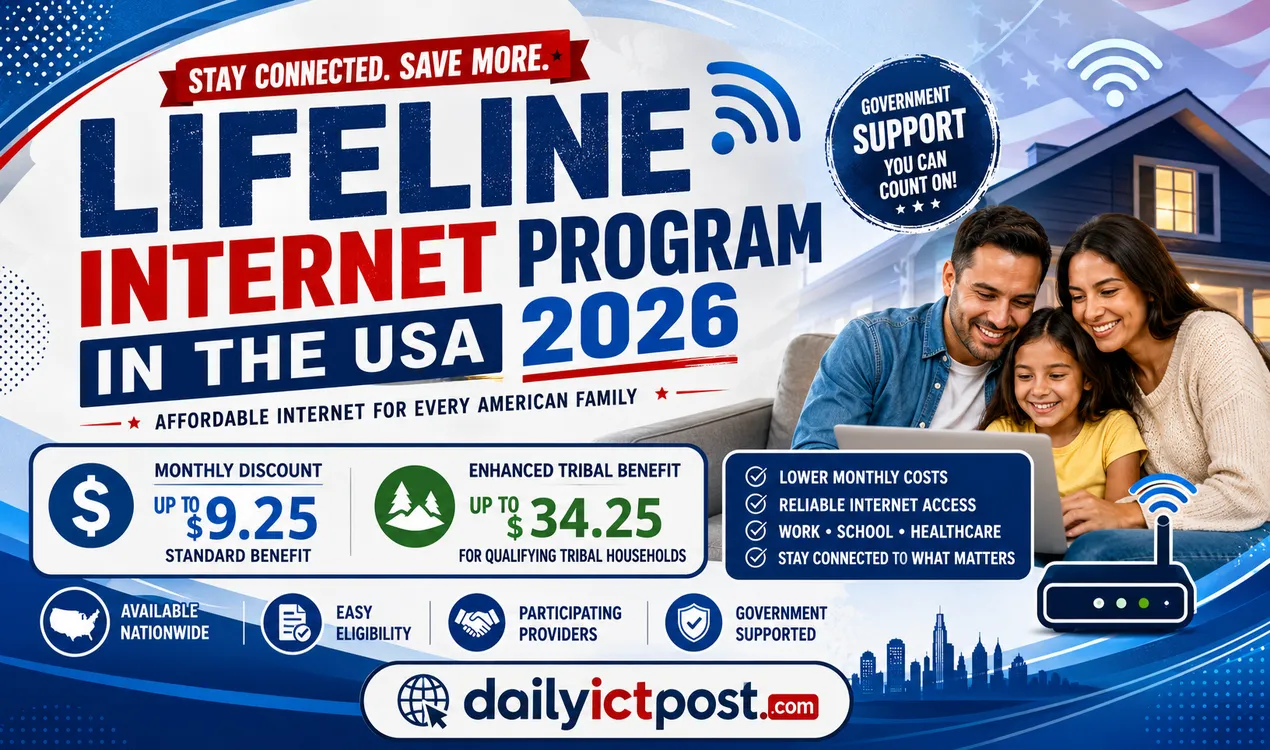
The Lifeline Internet Program in the USA 2026 continues to help eligible low-income households stay connected by reducing the cost of internet and communication services. For many families, this monthly discount can make a meaningful difference in their budget.
If you’re looking for information about eligibility, monthly benefits, application steps, or participating providers, this guide explains everything in a simple and practical way.
Quick Summary:
Program Active in 2026
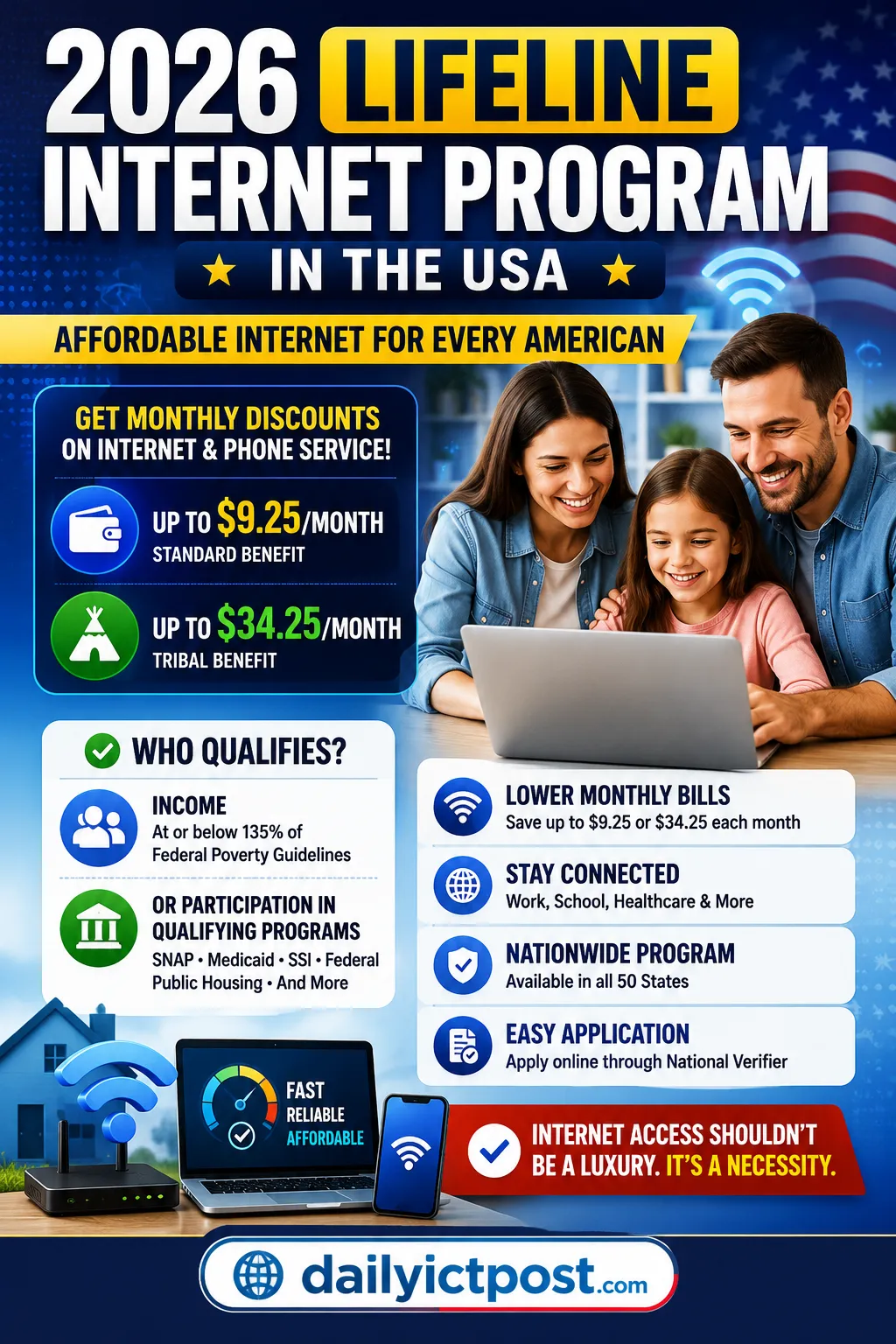
Standard Discount: Up to $9.25/month
Tribal Benefit: Up to $34.25/month
Eligibility: Income or qualifying assistance program
This article is for informational and educational purposes only and does not constitute legal, financial, or government advice. Lifeline eligibility, benefit amounts, participating providers, and application requirements may change. Always verify the latest information through official government sources, including the Federal Communications Commission (FCC), Universal Service Administrative Company (USAC), and Lifeline Support. We strive to keep this guide accurate and updated, but readers should confirm details before making enrollment decisions.
Lifeline Internet Program in the USA 2026 Free & Discounted Internet Guide
The Lifeline Internet Program in the USA 2026 is a federal assistance program that helps eligible households pay for internet and communication services. According to the Federal Communications Commission (FCC), Lifeline continues to provide monthly communication assistance for eligible households.
Although Lifeline originally focused on telephone service, it now helps qualifying consumers access broadband internet as well. The goal is simple: make communication services more affordable for households with limited income.
The monthly benefit can be applied to home internet service, mobile internet plans, phone service, or bundled plans offered by participating providers.
Many applicants assume Lifeline automatically provides free internet service. In reality, the program offers a monthly discount that is applied to eligible plans. The actual amount you pay depends on the provider, plan pricing, and any equipment fees.
Today, many essential services are available primarily online. Job applications, telehealth appointments, online education, and government assistance programs often require internet access.
Without reliable internet service, families may face barriers when applying for jobs, attending online classes, accessing healthcare resources, or completing official paperwork.
The Lifeline Internet Program in the USA 2026 helps reduce those barriers by making internet service more affordable for eligible households.
Many consumers still confuse Lifeline with the former Affordable Connectivity Program (ACP).
The ACP ended in 2024 after federal funding expired. However, the Lifeline Internet Program in the USA 2026 remains active and continues providing monthly assistance to qualifying households.
As a result, Lifeline remains one of the primary federal internet affordability programs available nationwide.
Lifeline Internet Discount Amount in 2026
The amount you receive depends on your eligibility category and where you live.
Benefit Type
Monthly Discount
Standard Lifeline Benefit
Up to $9.25
Enhanced Tribal Benefit
Up to $34.25
The discount is applied directly to your monthly bill through a participating provider.
Most eligible households receive up to $9.25 per month. While this amount may not cover the entire bill, it can noticeably reduce the cost of affordable internet plans.
Many providers offer low-cost plans that work well with the Lifeline benefit, helping families save more over time.
This is one reason the Lifeline Internet Program in the USA 2026 continues to be valuable for millions of Americans.
Enhanced Tribal Benefit
Eligible households living on qualifying Tribal lands may receive up to $34.25 per month.
This enhanced benefit was designed to improve connectivity in communities that have historically faced internet access challenges.
Additional eligibility pathways may apply to Tribal residents.
One Benefit Per Household
Federal rules generally limit Lifeline assistance to one benefit per household.
A household includes people who share income and living expenses, even if they are not related.
Applicants should review household eligibility requirements before submitting an application.
Eligibility for the Lifeline Internet Program in the USA 2026 is usually based on household income or participation in qualifying federal assistance programs.
Many Americans qualify without realizing it.
Reviewing the eligibility criteria can help determine whether you can receive the monthly discount.
Income-Based Eligibility
You may qualify if your household income is at or below 135% of the Federal Poverty Guidelines.
Income limits vary depending on household size and annual federal updates.
Applicants may need to provide documentation such as tax returns, income statements, or other proof of income.
Program-Based Eligibility
You may also qualify if you participate in one of the following programs:
Qualifying Program
SNAP (Food Stamps)
Medicaid
Supplemental Security Income (SSI)
Federal Public Housing Assistance
Veterans Pension Benefit
Survivors Pension Benefit
Participation in any qualifying program may simplify the verification process.
Tribal-Specific Eligibility Programs
Additional eligibility options may be available for residents of qualifying Tribal lands.
Bureau of Indian Affairs General Assistance
Tribal TANF
Food Distribution Program on Indian Reservations
Income-based Tribal Head Start programs
These programs may qualify households for enhanced Lifeline benefits.
Applying for the Lifeline Internet Program in the USA 2026 is usually a straightforward process.
Lifeline Internet Program in the USA 2026
Step 1: Check Eligibility
Review eligibility requirements through the National Verifier system.
You may need information such as your legal name, date of birth, address, and identification details.
Providing accurate information helps prevent delays.
Step 2: Submit Supporting Documents
Depending on your eligibility category, you may need to submit proof of income, benefit award letters, tax documents, or identification.
Clear and complete documents help speed up the review process.
Always double-check documents before uploading them.
Step 3: Select a Participating Provider
Once approved, choose a participating provider that serves your area.
Available providers vary by ZIP code and state.
Comparing plans before enrolling can help you find the best value.
Step 4: Activate Your Service
After enrollment, the Lifeline discount is applied directly to your monthly bill.
Activation timelines vary by provider.
Most consumers can begin using their service shortly after approval.
Lifeline Internet Program USA 2026 Availability by State
The Lifeline Program is available nationwide, including in California, Texas, Florida, New York, and Pennsylvania.
However, Lifeline benefits are federal, while internet provider availability varies by ZIP code. This means eligible households in the same state may have different provider options depending on where they live.
Some areas have multiple Lifeline-supported internet companies, while others may have only one participating provider. Before applying, check local provider availability through Lifeline Support Official Website.
Your eligibility remains the same nationwide, but available plans, speeds, and participating providers can differ by location.
Best Lifeline Internet Providers in 2026
Provider availability depends on your location.
Provider Type
Service Offered
Cable Internet Providers
Home Broadband Service
Fiber Internet Providers
High-Speed Internet
Wireless Carriers
Mobile Data Service
Regional ISPs
Discounted Home Internet
Before choosing a provider, compare monthly pricing, data allowances, equipment fees, installation charges, and contract terms.
The cheapest advertised plan is not always the most affordable option after fees are included.
Taking time to compare plans can help maximize the value of the Lifeline Internet Program in the USA 2026.
Lifeline Internet vs Regular Internet Plans
Feature
Lifeline Plan
Standard Plan
Monthly Discount
Yes
No
Eligibility Required
Yes
No
Government Support
Yes
No
Availability
Participating Providers
Most Providers
Monthly Cost
Generally Lower
Generally Higher
Many households use Lifeline benefits to reduce internet costs while maintaining reliable service for daily needs.
Common Lifeline Application Mistakes
Using Incorrect Personal Information
Information submitted during the application process should match official records.
Even small errors can delay approval.
Uploading Unclear Documents
Unreadable documents are one of the most common causes of application delays.
Use clear, high-quality scans or photos whenever possible.
Missing Recertification Deadlines
Lifeline participants must periodically confirm continued eligibility.
Missing recertification requirements can result in loss of benefits.
Lifeline vs ACP vs Low-Cost ISP Programs
Feature
Lifeline
ACP (Ended)
ISP Discount Plans
Active 2026
Yes
No
Yes
Government Funded
Yes
No
No
Eligibility Rules
Yes
N/A
Varies
Quick Facts About the Lifeline Internet Program in the USA 2026
Fact
Details
Program Status
Active
Federal Agency
FCC
Standard Benefit
Up to $9.25
Tribal Benefit
Up to $34.25
Income Threshold
135% FPG or Less
Nationwide Availability
Yes
Internet Support
Yes
Expert Tips to Maximize Savings
Compare multiple participating providers before enrolling.
Review equipment and installation fees carefully.
Keep eligibility documents organized.
Respond quickly to recertification notices.
Ask providers about additional low-income internet plans.
Check data limits if you regularly stream video or work from home.
Combining affordable plans with the Lifeline Internet Program in the USA 2026 can help eligible households reduce monthly communication expenses.
Example Savings Scenario:
Example: A household paying $40 per month for internet service could reduce the monthly bill to approximately $30.75 after applying the standard Lifeline discount. Over one year, that could result in savings of more than $110.
Is the Lifeline Internet Program still available in 2026?
Yes. The Lifeline Internet Program in the USA 2026 remains active and continues helping eligible households reduce communication costs.
How much can I save each month?
Most eligible households can receive up to $9.25 per month, while qualifying Tribal households may receive up to $34.25.
Can Lifeline provide free internet service?
Lifeline provides a discount rather than a guaranteed free internet plan. Available plans depend on participating providers in your area.
Can seniors qualify?
Yes. Many seniors qualify through income eligibility or participation in programs such as Medicaid or SSI.
Is Lifeline available nationwide?
Yes. The program is available throughout the United States, although provider availability varies by location.
Do I need to renew my eligibility?
Most participants must complete periodic recertification to maintain benefits.
Can Lifeline Be Combined With Other Low-Income Internet Plans?
Sometimes. It depends on the internet provider’s policies and available discounts.
What Happens If My Lifeline Application Is Denied?
You will receive a reason for the denial and may be able to correct errors or reapply.
How Long Does Lifeline Approval Take?
Most applications are approved within a few days, but some may take longer if additional verification is needed.
Can College Students Qualify For Lifeline?
Yes, if they meet the program’s income or eligibility requirements.
Does Lifeline Cover Wi-Fi Equipment?
Usually not. Lifeline primarily covers service discounts, while equipment availability depends on the provider.
Final Verdict
The Lifeline Internet Program in the USA 2026 remains an important resource for households that need help paying for internet and communication services. While the benefit is smaller than the former ACP discount, it still helps many Americans stay connected to work, education, healthcare, and essential online services.
If you qualify, taking a few minutes to apply could reduce your monthly expenses and make internet access more affordable. Before enrolling, compare available providers, review eligibility requirements, and submit accurate documentation to avoid delays.
The dailyictpost.com team presents job recruitment notices, various government and private job question solutions, government post activities and technology-based information in simple and practical language. Along with this, we explain ICT, mobile, computer, apps, online income, digital tools, government services, national elections and cyber security-related issues in such a way that the reader can understand and learn.
We believe that learning technology is not difficult, if it is explained correctly. Therefore, we present complex topics like using new software, mobile settings or digital marketing step by step in such a language that it feels like someone is sitting next to you and explaining it in a simple way.
Our goal is only one - that the reader gets accurate information, learns with confidence and can use that knowledge in real life.