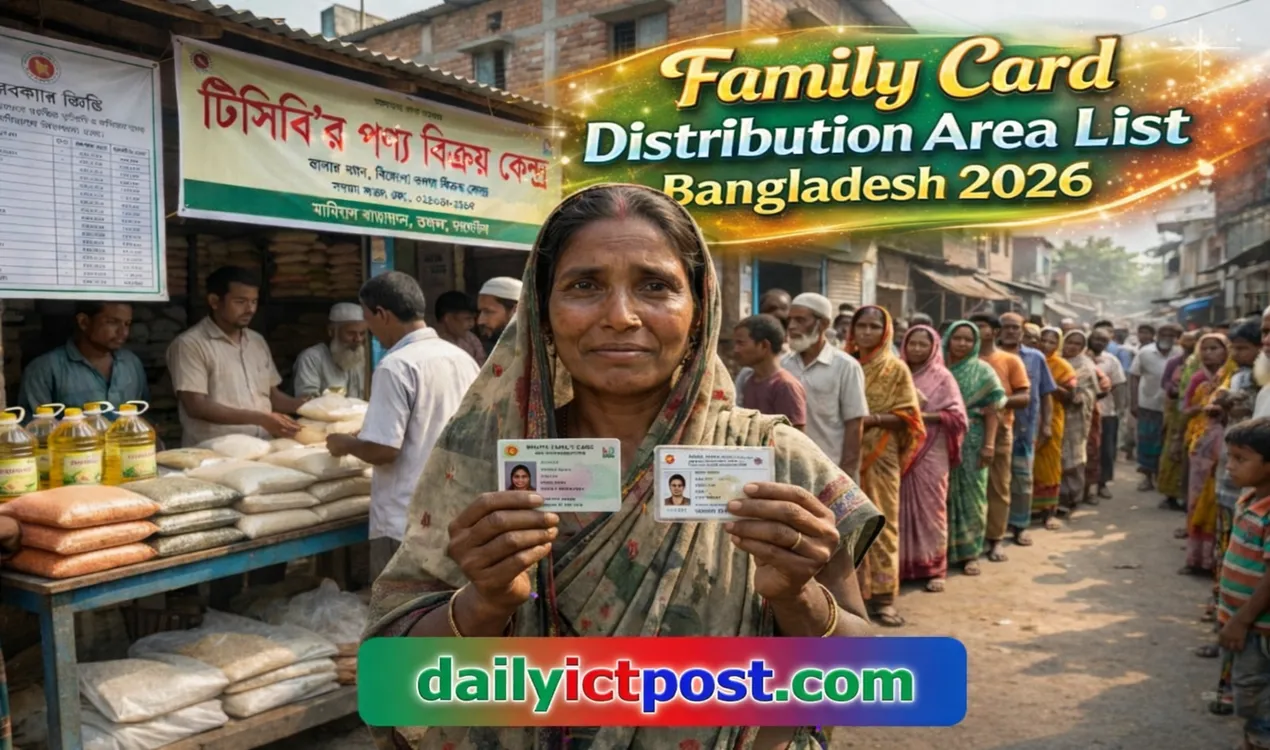
The government has officially published the Family Card Distribution Area List Bangladesh 2026, confirming the first districts, upazilas, and wards selected for the pilot phase.
This list determines which families will receive subsidised essential products through the TCB Family Card program.
If your area is included, you may become eligible for monthly subsidised food support.
In this post, you will find:
Official distribution area list
Division-wise district coverage
Pilot project locations
How to verify your eligibility
Family Card Distribution Area – Quick Overview
Pilot areas: 14 Upazilas
Coverage: All divisions
Authority: Trading Corporation of Bangladesh
Distribution type: Subsidised food
Total districts: 14
Total upazilas: 14
Coverage: All divisions
Family Card Distribution Area List Bangladesh 2026 (District & Upazila List)
The Trading Corporation of Bangladesh (TCB) is a state-run organization responsible for keeping the market prices of essential goods stable. When inflation hits hard and grocery prices soar, the TCB steps in to sell items like cooking oil, sugar, and lentils at much lower prices.
In the past, people had to stand in long, exhausting lines behind TCB trucks, often missing a day of work just to buy affordable food. The Family Card program changes all that. It is a highly organized approach where eligible families receive a specific card guaranteeing their monthly quota of groceries. Knowing the Bangladesh family card pilot area list 2026 helps us see where this organized system is being tested before it reaches the rest of the country.
The selected locations were chosen based on income level, population density, and economic vulnerability to ensure support reaches the most affected communities. There is a deep strategy behind the Family Card distribution location list Bangladesh 2026. Here is what the program aims to achieve:
Targeted Support for the Vulnerable: Instead of anyone buying from the trucks, the card system ensures that subsidized food goes directly to verified low-income households. This stops middlemen from buying cheap goods and reselling them at higher prices.
Bringing Dignity to the Process: No one should have to fight in a crowd for basic food. The card system allows families to visit local distributors at specific times, making the process safe, respectful, and organized.
Fighting Localized Inflation: By analyzing the TCB Family Card distribution area list 2026, we can see a clear focus on industrial zones and remote areas. Subsidizing food in these specific spots gives working-class families more breathing room to spend their limited income on education and healthcare.
The Family Card Distribution Area List Bangladesh 2026
The official data outlines the very first upazilas, districts, and divisions selected for this program. This pilot project covers a wide range of areas, from busy city slums to quiet, hard-to-reach villages. I have organized the official Family Card pilot project area Bangladesh 2026 data into a simple table so you can quickly find what you are looking for. The TCB family card pilot area Bangladesh list confirms the first selected upazilas and wards.
Official Government Source
According to Trading Corporation of Bangladesh (TCB), the pilot project has started in selected wards to test the distribution system before nationwide expansion.
Ward-8 (Alimiar Tek Slum), Ward-14 (Baganbari Slum)
3
Faridpur
Rajbari
Pangsha
1 Ward
4
Chattogram
Chattogram
Patenga
1 Ward
5
Chattogram
Brahmanbaria
Bancharampur
1 Ward
6
Chattogram Hill Tracts
Bandarban
Lama
1 Ward
7
Khulna
Khulna
Khalishpur
1 Ward
8
Barishal
Bhola
Char Fasson
1 Ward
9
Sylhet
Sunamganj
Derai
1 Ward
10
Mymensingh
Kishoreganj
Bhairab
1 Ward
11
Rajshahi
Bogra
Bogra Sadar
1 Ward
12
Rajshahi
Natore
Lalpur
1 Ward
13
Rangpur
Thakurgaon
Thakurgaon Sadar
1 Ward
14
Rangpur
Dinajpur
Nawabganj
1 Ward
Bangladesh Family Card Distribution District and Upazila List 2026 (Division wise)
Looking at a table is helpful, but it does not tell the whole story. To truly grasp the impact of the Family Card distribution district list 2026 Bangladesh, we need to look at why these specific places were chosen. Each area faces unique daily challenges. Here is my breakdown of the regional selections.
Bangladesh Family Card Distribution District and Upazila List 2026 (Division wise)
Dhaka Division:
Dhaka is the economic engine of the country, but living costs here are incredibly high. The Family Card Distribution Area List Bangladesh 2026 shows a very specific strategy for the capital. Instead of covering whole neighborhoods, the focus is entirely on major slums where daily wage earners live.
Banani Thana’s Slum Communities: Banani might be an upscale area, but it is deeply connected to places like the Korail Slum. Thousands of domestic workers and rickshaw pullers live here. By including Korail, Sattola, and Vashantek slums in the Bangladesh family card pilot area list 2026, the government is directly feeding the workforce that keeps the city running smoothly.
Mirpur Circle’s Dense Neighborhoods: Mirpur is crowded and busy. The inclusion of Alimiar Tek Slum in Ward-8 and Baganbari Slum in Ward-14 shows a highly targeted approach. Families here live in tight quarters with high rent. Getting cheap groceries locally means they do not have to spend extra money on transport just to find a TCB truck.
The Chattogram Region:
Chattogram is famous for its massive seaport and heavy industries. The cost of living is almost as high as in Dhaka. The Family Card distribution location list Bangladesh 2026 balances the needs of factory workers with those living in challenging mountainous terrains.
Patenga’s Industrial Workers: Patenga is home to dock workers, garment employees, and fishermen. By choosing one ward here, the program ensures that people doing heavy physical labor have guaranteed access to nutritional staples like lentils and cooking oil.
Lama Upazila in the Hill Tracts: Delivering heavy sacks of sugar and oil to the Chittagong Hill Tracts is a massive logistical challenge. The inclusion of Lama in Bandarban is a major testing ground for the TCB Family Card distribution area list 2026. If the government can successfully deliver goods up these steep hills on schedule, it proves the system can work anywhere.
Barishal and Sylhet:
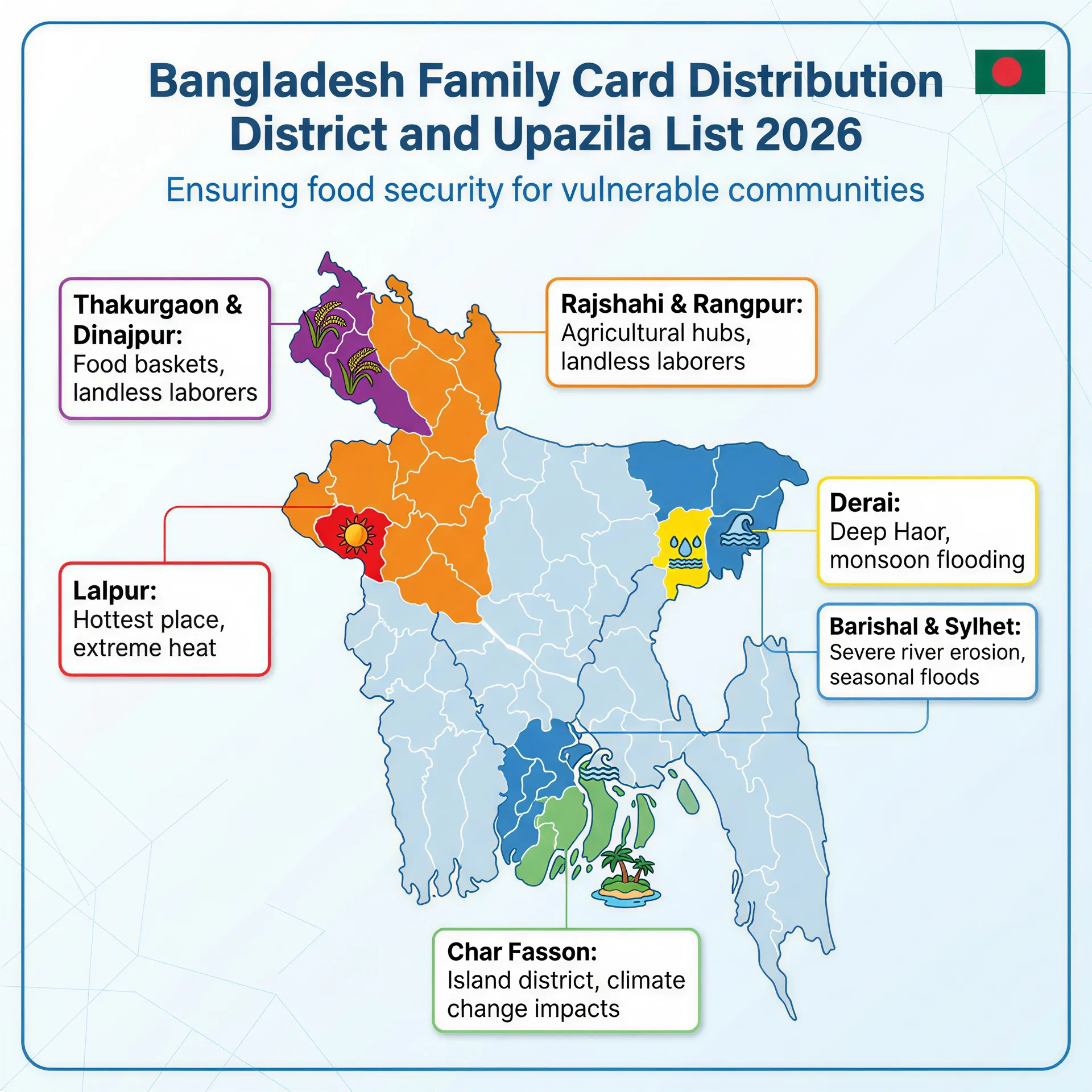
People living in Barishal and Sylhet face nature’s toughest tests, from severe river erosion to massive seasonal floods. The Family Card pilot project area Bangladesh 2026 brings much-needed relief to these vulnerable zones.
Char Fasson in Bhola: Bhola is an island district, and getting supplies across the water is tough. Char Fasson is constantly battling the impacts of climate change. Testing the card system here ensures that remote island families get food security without relying on unpredictable weather for shipments.
Derai in Sunamganj: Derai is a deep Haor (wetland) area. During the monsoon, the whole region goes underwater, and food prices shoot up because roads are cut off. By placing Derai on the Bangladesh Family Card Distribution District and Upazila List 2026, authorities are practicing how to maintain food supplies during peak flood seasons.
Rajshahi and Rangpur
The northern part of Bangladesh often deals with harsh weather, from extreme heat to sudden cold snaps, which directly harms farming incomes. The Family Card distribution district list 2026 Bangladesh covers these agricultural hubs to protect farmers during the off-season.
Lalpur in Natore: Known as the hottest place in the country, Lalpur has intense summers that make daily agricultural work almost impossible. Subsidized food here acts as a crucial safety net for farmers who lose out on daily wages due to extreme heat.
Thakurgaon and Dinajpur: These districts are the food baskets of the nation, growing most of the rice and wheat. Ironically, many landless farm laborers here struggle to buy food themselves. The inclusion of Thakurgaon Sadar and Nawabganj ensures these farming families receive steady support when field work dries up.
Every big change comes with growing pains. Moving from open trucks to a digital-friendly card system is a huge step forward, but we have to look at it realistically. Based on the Family Card Distribution Area List Bangladesh 2026, here is a practical look at what works and what needs improvement.
The Major Benefits
Guaranteed Fair Share: Families no longer have to worry that the truck will run out of oil before they reach the front of the line. Their quota is locked in.
Massive Time Savings: You can pick up your goods from a designated local shop rather than chasing a truck around the neighborhood.
Respectful Experience: The card system brings order. It removes the physical exhaustion and chaos of the old distribution methods.
The Challenges to Overcome
Initial List Errors: Creating a perfect list of the most vulnerable people is hard. Sometimes, deserving families might be left out of the initial Bangladesh family card pilot area list 2026 due to administrative mistakes.
Logistical Delays: Getting goods on time to places like Char Fasson or Lama requires perfect transportation planning. Any breakdown in the supply chain means families wait longer for their food.
Limited Coverage Right Now: Because this is just a pilot project, it is currently limited to just one ward in most upazilas. Neighboring wards in need will have to wait for the program to expand.
How to Verify Your Eligibility Status
If you live in one of the places mentioned in the Family Card distribution location list Bangladesh 2026, you are probably wondering how to get your card. It is a straightforward process managed entirely at the local level.
Step 1: Visit Your Local Office
Go directly to your Ward Councilor’s office if you are in the city, or the Union Parishad complex if you live in a rural area. They hold the official lists.
Step 2: Bring the Right Documents:
Always take your original National ID (NID) card and a copy of your birth registration. If you are the head of the household, take your dependents’ documents too.
Step 3: Ask About the Survey:
If your name is not on the TCB Family Card distribution area list 2026, ask the officials when the next household income survey will take place in your area so you can be included in the next round.
The local representatives are the ones who assess income levels. Priority naturally goes to day laborers, single mothers, and people living with disabilities who do not have a steady monthly paycheck.
Top 10 FAQs
1. What exactly is the Family Card Distribution Area List Bangladesh 2026?
It is the official government document that names the specific slums, wards, and upazilas where the new TCB Family Card system is being tested right now.
2. Why is the Family Card distribution district list 2026 Bangladesh so limited?
This is a pilot project. The government wants to test the delivery logistics in a few specific areas to fix any bugs before rolling it out to the entire country.
3. Are all parts of Dhaka included in the Bangladesh family card pilot area list 2026?
No, the focus is strictly on highly populated, low-income zones like the Korail, Sattola, Vashantek, Alimiar Tek, and Baganbari slums.
4. How do I know if I am on the Family Card distribution location list Bangladesh 2026?
You need to check with your local Union Parishad member or city Ward Councilor. They have the finalized list of eligible households for your area.
5. What kind of items can I buy through the TCB Family Card distribution area list 2026 program?
You can purchase essential daily groceries like soybean oil, sugar, and red lentils at heavily subsidized, below-market prices. Sometimes onions and chickpeas are added based on market needs.
6. Why was a remote area like Bandarban chosen for the Family Card pilot project area Bangladesh 2026?
Including Lama in Bandarban helps the government practice moving heavy food supplies up steep, difficult mountainous roads to ensure indigenous communities get equal support.
7. Can I use my card in a different ward or district?
No. Your card is strictly tied to your local distributor within the Bangladesh Family Card Distribution District and Upazila List 2026. This prevents confusion and keeps the local supply stable.
8. Will this program expand to my area soon?
Yes. Once the government reviews how well this pilot phase worked, they plan to expand the card system to cover all remaining districts and wards.
9. Do I have to pay money to get the card itself?
Absolutely not. Registration and the physical card are completely free. You only pay for the discounted groceries you actually take home.
10. What should I do if I lose my family card?
Report it immediately to your local Ward Councilor or Union Parishad. They will check your NID against their records and issue you a new card so you do not miss your monthly rations.
Conclusion
Understanding government relief programs shouldn’t be a headache. By looking closely at the Family Card Distribution Area List Bangladesh 2026, we can see a clear, thoughtful plan to help those who need it most. The card system replaces open truck sales with a structured distribution process.
When you review the Family Card distribution district list 2026 Bangladesh, it is obvious that authorities are testing the waters in every possible environment. From the bustling alleys of Banani to the quiet, flood-prone lands of Sunamganj, this Bangladesh family card pilot area list 2026 is laying the groundwork for a stronger national safety net.
If you are currently living in one of the Family Card distribution location list Bangladesh 2026 areas, make sure to reach out to your local representatives and get your documents in order. The success of the TCB Family Card distribution area list 2026 depends heavily on active community participation. I hope this breakdown of the Family Card pilot project area Bangladesh 2026 has cleared up your confusion. Let’s look forward to a smooth rollout where the Bangladesh Family Card Distribution District and Upazila List 2026 eventually grows to support every struggling household in the country.
The dailyictpost.com team presents job recruitment notices, various government and private job question solutions, government post activities and technology-based information in simple and practical language. Along with this, we explain ICT, mobile, computer, apps, online income, digital tools, government services, national elections and cyber security-related issues in such a way that the reader can understand and learn.
We believe that learning technology is not difficult, if it is explained correctly. Therefore, we present complex topics like using new software, mobile settings or digital marketing step by step in such a language that it feels like someone is sitting next to you and explaining it in a simple way.
Our goal is only one - that the reader gets accurate information, learns with confidence and can use that knowledge in real life.