Trying to navigate life without a solid internet connection in 2026 is beyond frustrating. Whether you are hunting for a new remote job, trying to attend a telehealth checkup, or just helping your kids with their homework, everything happens online. But when inflation hits your wallet hard, paying a massive telecom bill every month just isn’t an option for everyone.
That is exactly why figuring out how to locate a free wireless internet hotspot in the USA has become less of a travel hack and more of a daily survival tool.
According to FCC and industry reports, many households faced higher internet costs after ACP funding ended.
There are incredible hidden resources all around you right now. I discussed earlier in an article how local municipalities and non-profits are stepping up to bridge this digital divide. You just need a roadmap to find these networks, and that is exactly what I am going to share with you today.
By the end of this guide, you will know exactly where to go, what programs you qualify for, and how to protect your private data while browsing. We are going to slash your monthly bills together without sacrificing the high speeds you need for your daily life.
Quick Answer:
You can get free internet access in 2026 through:
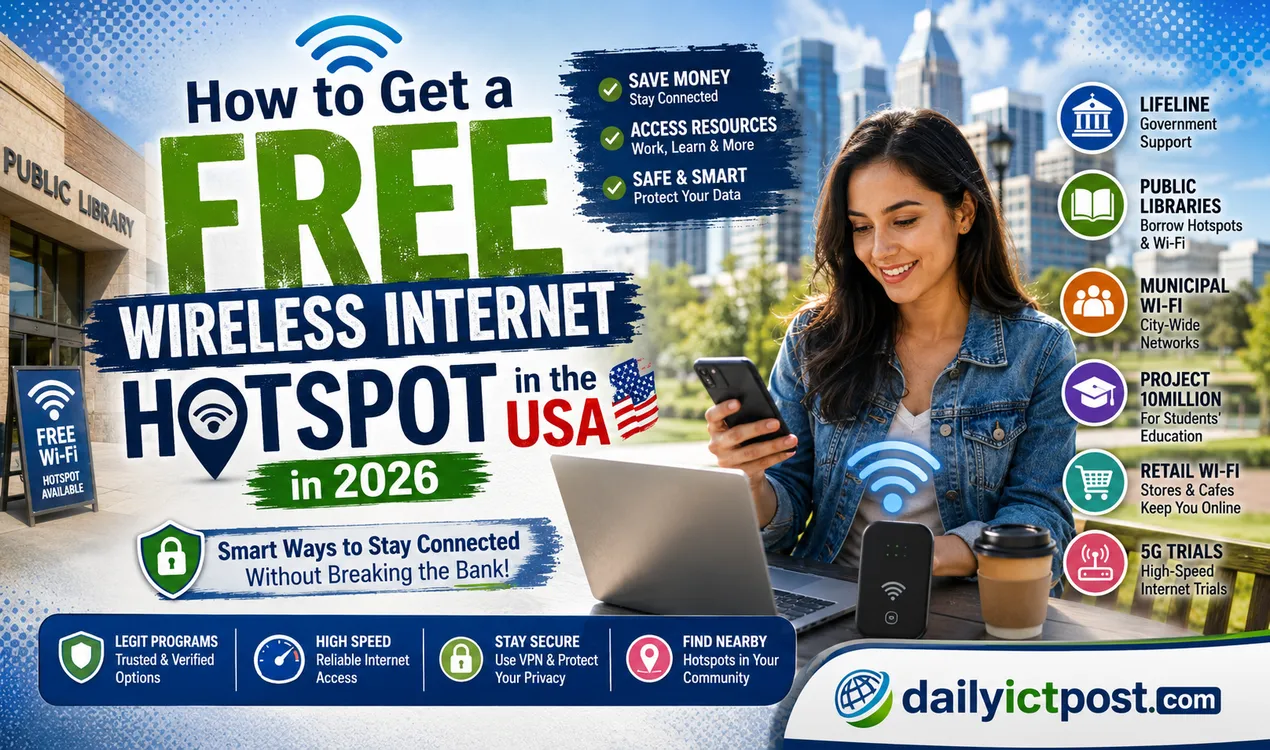
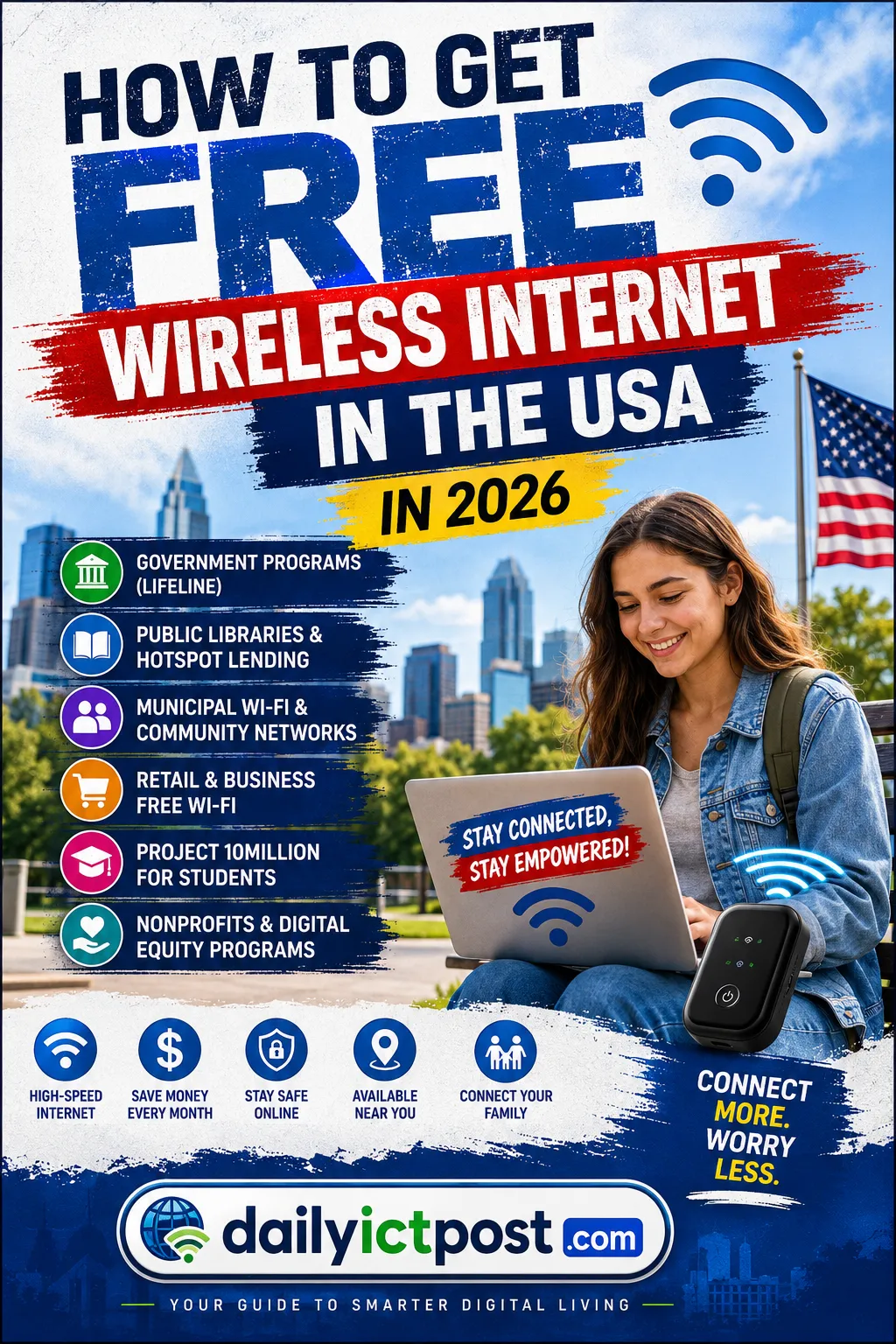
- Lifeline Program
- Public Libraries
- Project 10Million
- Municipal Wi-Fi Networks
- Community Centers
- Retail Store Wi-Fi
- Nonprofit Connectivity Programs
Most low-income households qualify through SNAP, Medicaid, SSI, or income-based eligibility.
Editorial & Accuracy Disclaimer:
Internet assistance programs, eligibility rules, and provider offers can change without notice.
While this guide is reviewed using publicly available government and nonprofit resources, availability may vary by state, ZIP code, provider participation, and funding levels.
Always confirm current requirements through official program websites before applying.
How This Guide Was Researched:
This guide was compiled using information from the FCC, USAC, CISA, FTC, public library technology programs, municipal broadband initiatives, and publicly available nonprofit digital equity resources active in 2026.
Life After the Affordable Connectivity Program (ACP)
If you relied on the Affordable Connectivity Program over the past few years, you already know the sting of losing it. When the federal funding for the ACP officially ran out, millions of people panicked. I remember reading stories about college students and seniors who suddenly had their internet shut off without much warning.
It was a tough transition, but the internet landscape didn’t completely collapse. While we don’t have a direct, one-to-one federal replacement for the ACP just yet, the tech world adapted. Many local internet service providers quietly stepped in to absorb the costs for their most vulnerable users, offering new affordable broadband subsidies.
You can still secure a free wireless internet hotspot in the USA if you know which local doors to knock on. You have to be a bit more proactive now. You can’t just wait for an automatic discount to appear on your bill; you need to actively hunt for local grants and corporate goodwill programs.
Don’t lose hope just yet. In the following sections, I will break down the exact government programs and community loopholes that are fully active right now. Many households still qualify for programs or community resources that reduce internet costs. The challenge is knowing which options are available in your area and whether you meet eligibility requirements.
What Changed in 2026?
Since ACP ended in 2024, most free internet options now come through:
- Lifeline
- School hotspot programs
- Library lending initiatives
- Municipal broadband projects
- Nonprofit digital inclusion programs
No nationwide ACP replacement currently exists.
The FCC Lifeline Program: Your Government-Backed Safety Net
If your budget is stretched dangerously thin, your very first stop needs to be the federal Lifeline program. Managed by the Universal Service Administrative Company, this is the most reliable, longest-running communications subsidy in the country. It has been helping Americans stay connected since the 1980s.
So, what does it actually do for you? Lifeline provides a direct, recurring monthly discount on your phone or internet service. But here is the best part: many modern providers bundle this discount to hand you a completely free smartphone that functions as a powerful mobile hotspot.
This effectively puts a free wireless internet hotspot in the USA right in your pocket. The standard discount covers up to $9.25 a month. However, if you live on recognized Tribal lands, the federal government boosts that benefit to a massive $34.25 per month, which easily covers a robust data plan.
It acts as the ultimate digital safety net. It ensures that no matter how tough things get financially, you can still call an ambulance, attend a Zoom interview, or keep in touch with your loved ones.
How to Qualify and Apply for Lifeline Services
I know what you are thinking: “Government programs require endless paperwork.” Surprisingly, getting approved for Lifeline is actually incredibly straightforward these days. You don’t need to jump through impossible bureaucratic hoops. You can qualify based on your income or your current government internet assistance programs.
If your total household income sits at or below 135% of the Federal Poverty Guidelines, you are already in. Better yet, if you currently receive SNAP (Food Stamps), Medicaid, SSI, or federal housing assistance, you are automatically fast-tracked for approval.
The process takes just a few minutes online. You just pull up the National Verifier website, snap a clear picture of your benefit card or a recent tax return with your phone, and hit submit. The system is designed to verify your identity and eligibility almost instantly.
Once you get that golden approval email, you can pick a participating telecom provider in your zip code. They will physically mail a SIM card or a brand-new device directly to your front porch. It really is that easy to get connected.
Project 10Million: Keeping Our Kids Connected to School
Let’s talk about the kids for a minute. Education is heavily dependent on the internet today. If a child doesn’t have Wi-Fi at home, they fall behind their classmates almost instantly. This heartbreaking reality is why major corporate initiatives like Project 10Million were born.
Project 10Million is a connectivity initiative operated by t-mobile.com that helps eligible K–12 students access internet service and hotspot devices for educational use., this program’s sole mission is to put a free wireless internet hotspot in the USA into the backpacks of eligible K-12 students. They want to completely eradicate the “homework gap” that plagues low-income school districts.
Families approved for the program receive a sleek, physical hotspot device for free, plus a massive chunk of high-speed data every single year for five years. Kids can stream educational videos, submit essays, and do their research without their parents stressing over data caps.
Qualifying is usually as simple as proving your child participates in the National School Lunch Program. I highly recommend calling your local school district’s administrative office or checking the U.S. Department of Education website to see how your school facilitates this life-changing program.
Best Free Internet Options Compared
| Option | Cost | Speed | Availability | Best For |
|---|---|---|---|---|
| Lifeline | Free / Discounted | Medium | Nationwide | Low-income families |
| Libraries | Free | High | Local | Temporary access |
| Municipal Wi-Fi | Free | Medium | Select cities | Outdoor use |
| Project 10Million | Free | High | Eligible students | Education |
| 5G Trial | Free (temporary) | High | Coverage-dependent | Short-term use |
Public Libraries That Offer Free Hotspot Lending Programs
If you think your local library is just a quiet building filled with dusty encyclopedias, you are missing out on the best tech hub in your city. Modern public libraries have completely transformed. They are the absolute heroes of community connectivity.
Sure, you can walk in and use their incredibly fast desktop computers, but they offer something even better. Many libraries across the country now run Wi-Fi hotspot lending programs. Yes, you read that right—you can borrow the internet.
You literally walk up to the front desk with your free library card and check out a portable router just like you would a DVD. You can take this free wireless internet hotspot in the USA back to your apartment for two to four weeks at a time. The library pays the entire data bill.
This is a total lifesaver for freelance workers, people traveling, or families dealing with a sudden ISP outage at home. Because libraries use federal tech grants to buy this equipment, the routers they give you are usually top-of-the-line and blazing fast.
Many participating libraries receive funding through the federal imls.gov and state technology grants.
Tapping Into Municipal City-Wide Wi-Fi Networks
Over the last decade, a lot of smart mayors and city councils realized something important: internet access is a public utility, just like the water running from your tap. This sparked a massive wave of municipal, city-funded broadband networks across the country.
Cities are bolting high-tech Wi-Fi antennas to water towers, park benches, and streetlights to blanket entire downtown districts in free connectivity. They do this specifically to help underserved neighborhoods stay connected to the local economy.
If you live near a downtown hub or a large public park, chances are you are standing right in the middle of a massive free wireless internet hotspot in the USA. You don’t have to pay a dime; your local tax dollars have already funded the infrastructure.
While the signal might get a bit weak if you try to use it through thick brick apartment walls, the outdoor and patio coverage is usually incredible. Check your city hall’s website to see if they have published a coverage map for your neighborhood.
Stores and Retail Chains Offering Free Public Wi-Fi
Sometimes you just need to download a heavy file or send an urgent email while you are out running errands. This is where giant national retail chains come to the rescue. They figured out years ago that giving you free Wi-Fi keeps you in their stores longer.
Brands like Target, Starbucks, Home Depot, and McDonald’s invest heavily in their public networks. They design them to handle hundreds of smartphones at once without crashing. Usually, you don’t even need a password; you just click “Agree” on a quick pop-up screen.
These spots are incredibly convenient if you are traveling cross-country and need a reliable connection to check your GPS or book a hotel. They are essentially a guaranteed free wireless internet hotspot in the USA no matter what state you are in.
Just keep in mind that these corporate networks often block you from doing heavy-duty tasks like downloading torrents or streaming 4K movies. They are built for light browsing and shopping, so treat them as a quick pit stop rather than your permanent home office.
Utilizing 5G Home Internet Trials for Gap Coverage
Have you ever moved into a new place and had to wait two weeks for the cable guy to show up? It is incredibly frustrating. If you need a temporary, high-powered solution, tapping into a 5G home internet trial is a genius move.
Big cellular companies like Verizon and T-Mobile frequently offer 15 to 30-day risk-free trials of their 5G home routers. You sign up online, they mail you a sleek box, you plug it into a wall outlet, and instantly have unlimited 5G internet in your living room.
If you cancel the service and mail the box back before the trial ends, you just scored a month of ultra-fast internet completely for free. It requires putting a credit card on file, but it acts as an amazing, heavy-duty gap filler.
Just be organized. Set a strict reminder on your phone to return the equipment before the billing cycle hits. If you manage it right, it is a fantastic, temporary way to stay online without signing a nasty two-year contract.
Overcoming Broadband Challenges on Tribal Lands
We have to acknowledge that getting online on Tribal lands has historically been an absolute nightmare. Geographic isolation, insane infrastructure costs, and systemic neglect left many Native communities completely in the dark digitally.
But things are finally, slowly getting better. The federal government has started pushing massive grants specifically designed to build out high-speed networks on reservations. Local leaders are using these funds to erect long-range towers that beam free Wi-Fi to remote homes.
Furthermore, that enhanced Lifeline benefit I mentioned earlier—the one that offers up to $34.25 a month—makes a massive difference here. It allows families to actually afford the satellite or fixed-wireless solutions that are often the only options available.
If you live on recognized Tribal lands, don’t assume you are out of luck. Reach out to your local community action agency. There are new subsidies and community-led hotspots popping up constantly, thanks to data from the FCC National Broadband Map.
Non-Profits: The Unsung Heroes of Digital Equity
While the government and big corporations do their part, I have a special place in my heart for digital equity non-profits. These grassroots organizations truly believe that a free wireless internet hotspot in the USA is a basic human right.
Take organizations like Human-I-T, for example. They gather up discarded corporate laptops, fix them up beautifully, and give them to low-income families. But they don’t stop there; they actually sit down with you and help you apply for cheap internet subsidies.
A lot of local charities also build neighborhood mesh networks right inside low-income housing complexes. They pay for the main fiber line and beam the signal to every apartment for free. It is community care at its absolute finest.
If you are struggling with complex government forms or just need a gentle hand pointing you toward the right resources, look up digital equity charities in your county. They have access to local grants you won’t find on a Google search.
The Ugly Truth About Public Wi-Fi Cybersecurity
Public Wi-Fi networks can expose users to additional privacy and security risks, particularly when sensitive information is transmitted without encryption.
Cybercriminals love to hang out on these networks. They execute “Man-in-the-Middle” attacks, which basically means they secretly wedge their laptop between your phone and the coffee shop’s router. They watch everything you do in real-time.
They can easily snatch your passwords, read your private emails, or inject nasty malware right into your device. The Cybersecurity & Infrastructure Security Agency (CISA) constantly warns people against entering sensitive data on open networks.
You absolutely must treat every single public network as if it is actively compromised. Convenience is great, but it is never worth having your bank account drained or your identity stolen.
How to Bulletproof Your Devices on Public Networks
Don’t panic—you don’t have to swear off public Wi-Fi forever. You just need to be smart and arm your devices before you leave the house. The golden rule is simple: use a Virtual Private Network (VPN).
A premium VPN scrambles all your data into an unreadable code and shoves it through an invisible, armored tunnel. Even if a hacker is sitting right next to you on a free wireless internet hotspot in the USA, all they will see is complete gibberish.
Skip the sketchy free VPNs on the app store—they usually sell your data to advertisers anyway. Spend the $4 a month for a premium, trusted service. Also, dive into your phone settings and turn off “auto-connect to open networks.”
According to the Federal Trade Commission (FTC), you should manually control exactly when and where your phone connects. Keep your software updated, leave your firewall on, and you will be perfectly safe browsing in public.
Pros and Cons: The Reality of Free Connectivity
Relying completely on public networks is entirely possible, but I want you to have realistic expectations. It is a bit of a balancing act. Let’s look at the actual realities of living on free Wi-Fi.
| Feature | The Awesome Benefits | The Frustrating Drawbacks |
|---|---|---|
| Financial Relief | You save hundreds of dollars every single year. | You might have to endure pop-up ads to log in. |
| Ultimate Freedom | Work from parks, cafes, or libraries anywhere. | Speeds crawl to a halt when the place gets crowded. |
| Easy Access | Thousands of locations available nationwide. | The signal instantly dies when you walk to your car. |
| Privacy | Quick access to check weather or maps anonymously. | Extremely high risk of malware and data tracking. |
Look, the biggest win here is obvious: keeping your hard-earned cash in your pocket. When times are tough, dodging a $90 internet bill is huge. But because of the speed drops and security risks, I always suggest using these networks as a solid backup plan rather than your main office line.
States with Strong Public Wi-Fi and Broadband Initiatives
Several states continue investing in public internet access and broadband expansion programs to improve connectivity for residents.
- California — Expands broadband infrastructure and supports public Wi-Fi access in underserved communities.
- New York — Funds statewide broadband projects and public internet initiatives.
- Texas — Invests in rural broadband expansion and connectivity programs.
- Colorado — Supports broadband grants aimed at improving access in remote areas.
- Illinois — Funds community broadband projects and public internet access programs.
These states are among the most active in expanding affordable internet access and reducing connectivity gaps.
What People Commonly Use Most
Based on community discussions and nonprofit digital inclusion programs, the most commonly used free internet options are:
1. Public library hotspots
2. Lifeline-supported mobile service
3. School hotspot programs
4. Municipal Wi-Fi
Quick Eligibility Check
You may qualify for Lifeline if you:
- Receive SNAP
- Receive Medicaid
- Receive SSI
- Receive Federal Housing Assistance
- Have household income at or below 135% of Federal Poverty Guidelines
How to Get Free Internet Access in the USA in 2026
We have covered a massive amount of ground today, and I hope you feel way more empowered about your internet options. Finding a dependable free wireless internet hotspot in the USA is no longer an impossible puzzle. The resources are sitting right there in your community.
Whether you choose to apply for the federal Lifeline program, check out a hotspot from your local library, or just rely on your city’s downtown mesh network, you have real, viable options. You don’t have to suffer in digital silence just because the ACP ended.
My biggest piece of advice? Be proactive and protect yourself. Grab a good VPN, turn off your auto-connect settings, and start exploring the digital equity resources in your specific county.
Stay smart, stay safe, and enjoy all the incredible opportunities the internet has to offer without breaking the bank.
Important Limitations
Not all programs are available nationwide.
Availability depends on:
- – ZIP code
- – School district
- – Library system
- – Internet provider participation
- – Local funding availability
Always verify current availability before applying.
Frequently Asked Questions (FAQ)
Is it actually possible to find a truly free wireless internet hotspot in the USA?
Yes, absolutely. Between public libraries, city-funded municipal networks, and massive retail chains, you can find completely free access almost anywhere in the country without paying a cent.
Did the government entirely stop paying for people’s internet?
No, they just shifted gears. While the Affordable Connectivity Program (ACP) ended, the FCC Lifeline program is still fully active and provides monthly discounts for low-income households.
Can I safely log into my bank account at a coffee shop?
I highly advise against it. Unless you have a premium VPN actively running to encrypt your connection, typing your bank password on an open network is incredibly risky.
What do I need to show to get approved for the Lifeline program?
You just need to upload a quick photo of your recent tax return to prove your income, or a picture of your active SNAP, Medicaid, or SSI benefit card.
Can my kids get a free Wi-Fi device for their homework?
Yes! Corporate initiatives like Project 10Million partner with schools to give eligible students a free hotspot device and yearly data to ensure they don’t fall behind.
How long can I borrow a Wi-Fi hotspot from the public library?
Most public library systems will let you check out a mobile hotspot device for anywhere from two to four weeks, and they cover the entire data bill.
Why do I need to pay for a VPN if the Wi-Fi is free?
Because free Wi-Fi comes with hidden costs like hackers stealing your data. A paid VPN (usually $4/month) acts like an armored truck for your private information.
Will 5G home internet trials affect my credit score?
No, taking advantage of a 15 or 30-day trial from a major carrier won’t hurt your credit, but you must remember to return the device before they charge your card.
Do I need to be a US citizen to use the library’s Wi-Fi?
Not at all. Public libraries are open to everyone, regardless of immigration status. You can walk in and connect your phone without showing any ID.
What is the fastest way to locate a hotspot when my data is dead?
Download community-sourced apps like Instabridge or WiFi Map before you leave home. They give you offline maps of local networks and their passwords.
Is Lifeline available in every state?
Yes, Lifeline is available in all U.S. states, territories, and Tribal lands.
What happened after ACP ended?
The Affordable Connectivity Program (ACP) ended in 2024 after federal funding ran out.
Can I combine Lifeline with local internet assistance programs?
Sometimes. It depends on the rules of the local assistance program.
How do I find free Wi-Fi near me?
Check libraries, schools, community centers, cafes, and local government facilities.
Are public Wi-Fi networks safe for telehealth appointments?
They can be risky. Use secure networks, avoid sharing sensitive information, and use a VPN if possible.
Conclusion:
At the end of the day, securing a free wireless internet hotspot in the USA is no longer an impossible task. Even though major federal subsidies like the ACP have officially ended, the digital landscape is still full of hidden, localized opportunities. From leveraging the ongoing Lifeline program to simply checking out a Wi-Fi router from your local public library, you have real, viable options to keep your household connected without taking on a massive monthly telecom bill.
The real secret is simply knowing where to look and being highly proactive about your digital privacy. Always remember to protect your personal data with a reliable VPN when using public municipal networks, coffee shops, or retail store Wi-Fi. By safely taking advantage of these local community resources and non-profit tech initiatives, you can effortlessly access the high-speed internet you need for remote work, school, and daily life.
Don’t let the rising cost of telecommunications keep you disconnected from the world. Start exploring the active government internet assistance programs available in your specific state today, and take full control of your digital connectivity.
Sources Used for This Guide
This guide was reviewed using information from:
- – FCC
- – USAC
- – FTC
- – CISA
- – Institute of Museum and Library Services (IMLS)
- – U.S. Department of Education



![[State-by-State Guide] New Rules That Could Save You Thousands - Medicaid Income Limits Updated 2026 USA](https://dailyictpost.com/wp-content/uploads/2026/04/State-by-State-Guide-New-Rules-That-Could-Save-You-Thousands-Medicaid-Income-Limits-Updated-2026-USA-150x150.webp "[State-by-State Guide] Medicaid Income Limits Updated 2026 USA | New Rules That Could Save You Thousands")