The air on election day has a unique quality, that is a mix of civic pride, collective anticipation, and the quiet weight of responsibility. For many, it’s a day to actively participate in shaping the future of their community and country. Yet, this important day can often be derailed by a simple but frustrating problem: not knowing where to go. The frantic search for your designated polling station, the confusion of asking for directions, and the anxiety of a ticking clock can turn a moment of empowerment into a stressful ordeal. In the worst-case scenario, it can even prevent you from casting your vote altogether.
Fortunately, the days of relying on faded paper notices or word-of-mouth are over. Technology has provided a powerful, straightforward solution that puts all the necessary information right at your fingertips. With just a few taps on your smartphone, you can find polling center details using verified voter information tools, such as the Smart Election Management app explained here.
This comprehensive guide is designed to be your trusted companion for election day. We will walk you through everything you need to know, from using modern digital tools to having backup plans in place. Our goal is to ensure you can approach your polling station with confidence, fully prepared to exercise your democratic right without a single hitch.
Important Note:
Find Polling center information, app availability, SMS formats, and election procedures may change depending on the election type and official announcements. Always verify final details through your country’s official Election Commission website or verified government channels before election day.
Why You Should Find Polling Center in Advance
Thinking ahead is always a good strategy, and this is especially true for election day. Being proactive about locating your polling station isn’t just about convenience; it’s about being a responsible and effective citizen. Think of it like preparing for an important trip. You wouldn’t just show up at the airport without knowing your flight details, and you shouldn’t head out to vote without knowing your destination.
Avoid Unnecessary Election Day Stress
The environment on election day can be hectic. By preparing in advance, you can sidestep several common stressors.
- The Time Crunch: Most people have to fit voting into their busy schedules, often before or after work or during a short lunch break. Every minute is precious. Getting lost or going to the wrong location can lead to significant delays, putting you at risk of not making it back to work on time or, even worse, arriving after the polls have closed.
- Navigating Crowds and Confusion: Polling places are naturally busy hubs of activity. When you arrive knowing exactly where you need to be, you can navigate the area with a sense of purpose. If you’re already lost and flustered, the crowds and long lines can feel overwhelming, adding to your stress levels.
- The Risk of Misinformation: Polling locations can, and sometimes do, change from one election to the next due to logistical reasons like venue availability or redistricting. Relying on memory or information from a previous election is a gamble. Verifying the location for the current election is the only way to be absolutely sure you are headed to the right place.
Guarantee Your Vote is Counted
Ultimately, the goal is to cast your ballot. The single biggest barrier to voting is often simple logistics. By failing to find your polling center in advance, you run the real risk of disenfranchising yourself. A little preparation is a small price to pay to ensure your participation in the democratic process.
The Modern Solution: A Step-by-Step Guide to Digital Tools
The evolution from analog to digital has transformed how we access voter information. Gone are the days of waiting for a voter card in the mail or scanning community bulletin boards. Today, government-led initiatives have produced applications and online portals designed to make this information accessible to everyone.
This detailed guide will focus on using a dedicated mobile application—a common tool provided by election authorities.
Step 1: Download the Official App
Your first task is to download the correct app. Head to your phone’s official app store (the Google Play Store for Android or the Apple App Store for iOS). In the search bar, type the name of the official election app. It’s crucial to use the official application developed by the election commission to ensure the data is accurate and your personal information remains secure. Avoid third-party apps that claim to offer the same service.
Step 2: Navigate to the Voter Information Section
Once the app is installed and opened, familiarize yourself with its layout. The user interface is generally designed to be intuitive.
- Look for a clearly labeled button or menu option such as “Find Vote Kendra,” or “Polling center Information,” or “Voter Services.”
- Upon entering this section, you will likely be prompted to select the specific election you are voting in, for instance, the “Thirteenth National Parliament Election.” This is a critical step because, as mentioned, polling locations can differ between national, local, or special elections.
Step 3: Enter Your Personal Details with Care
This is the verification stage, where you prove your identity to the system.
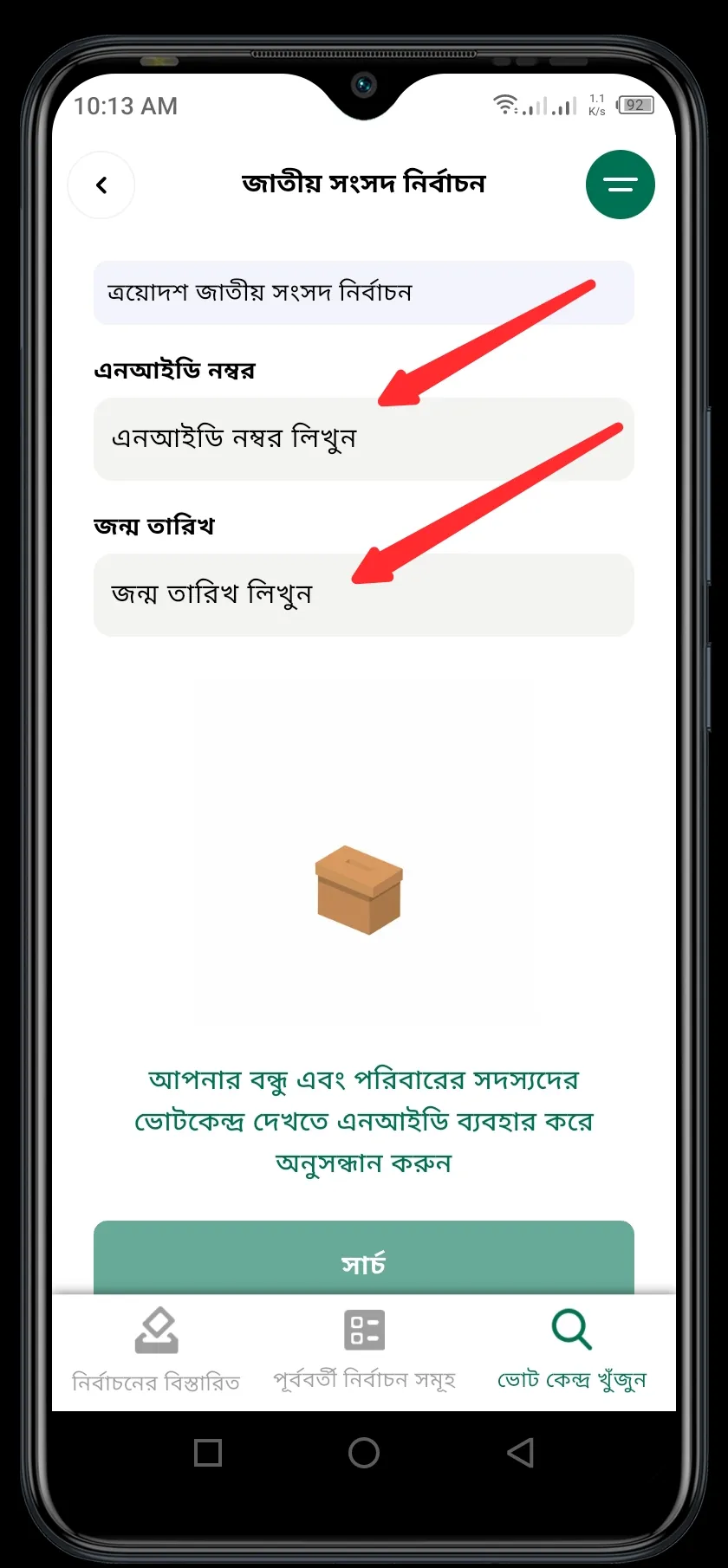
- National ID (NID) Number: You will be asked to enter your National ID number. This is the unique identifier that links you to the voter rolls. To avoid errors, have your physical NID card in front of you. Type the number slowly and double-check it. A single incorrect digit will result in an error.
- Date of Birth: The app will also require your date of birth as a secondary security measure. Be mindful of the format required (e.g., DD-MM-YYYY). Mismatching the format or entering the wrong date is a common reason for search failures.
Step 4: Access and Save Your Polling Information
After you have correctly entered and submitted your details, the app will process your request. In just a few moments, your screen should display all the vital information you need. This typically includes:
- The official name of your polling center (e.g., “Dhaka Primary School”).
- The full, detailed address of the location.
- Your voter serial number and voter area.
- Sometimes, a direct link to view the location on a map (like Google Maps) is also provided.
Once you have this information, don’t just close the app. Take a screenshot or write it down. You cannot rely on having a stable internet connection on election day itself. Having a saved copy on your phone or a physical note in your pocket is the safest bet.
What if I Can’t Use the App? Reliable Alternative Methods
We recognize that not everyone owns a smartphone or feels comfortable using apps. The good news is that there are excellent, equally reliable alternative methods available to find your polling center.
Method 1: The Official Election Commission Website
Nearly every national election authority maintains an official website that serves as a central hub for information. These websites almost always feature an online “Voter Information Portal.” The process is very similar to using the app: you will need to navigate to the correct section and enter your NID number and date of birth to retrieve your polling station details. This is a great option if you’re using a laptop or desktop computer.
Method 2: The SMS Service
For maximum accessibility, many election commissions offer a simple SMS-based service. This is a fantastic option for those without internet access or a smartphone. The process usually involves sending a text message with your information in a specific format to a designated short-code number. For example, the format might be: NID <space> [Your NID Number] sent to a number like 105. A reply message will soon arrive with your polling center details. Check the official election commission website for the exact format and number.
Method 3: Contacting Your Local Election Office
If digital methods aren’t an option, you can always go the traditional route. Your local or district election office is tasked with managing voter information for your area. You can find their contact number online or in a local directory. Be aware that their phone lines can become extremely busy in the days leading up to the election, so it’s best to call well in advance.
Election Day Checklist After Finding Your Polling center
Knowing your destination is half the battle. Now, let’s ensure the rest of your voting experience is just as smooth.
Plan Your Journey:
Use a tool like Google Maps to look up the address of your polling station. Check the distance, estimate travel time, and consider potential traffic. Decide on your mode of transport—will you be driving, taking public transit, or walking? Having a clear travel plan removes last-minute uncertainty.
Know the Official Hours:
Polling stations operate within specific hours, typically from early morning to late afternoon (e.g., 8:00 AM to 4:00 PM). Confirm these times and plan to arrive with plenty of time to spare. Remember, as long as you are in line before the official closing time, you are entitled to vote.
Gather Your Required Documents:
Make sure you have your National ID card ready. It is the primary document required for voter identification. It’s also wise to check if any other forms of ID are acceptable as a backup. Keep your documents in an easily accessible place.
Become a Community Champion:
Now that you’re an expert on how to find your polling center, why not share that knowledge? Take a few minutes to help an elderly family member, a busy neighbor, or a friend who is less familiar with the process. Assisting them isn’t just a kind gesture; it’s a way to strengthen your community’s civic engagement and contribute to a higher voter turnout.
Conclusion: Your Vote is Your Voice—Be Ready to Use It
Voting is the cornerstone of a functioning democracy. It is our collective opportunity to express our values, choose our leaders, and shape the direction of our nation. Don’t let a simple logistical challenge like finding your polling station become a barrier to this fundamental right.
By taking a few moments to prepare, you empower yourself to participate fully and confidently. Use the digital tools at your disposal, have a backup plan ready, and help others in your community do the same. When you step into that voting booth, you should be focused on the choice you are making, not worried about how you got there. Plan ahead, be prepared, and make your voice heard.
Disclaimer: This guide is written to simplify official election procedures using publicly available voter information systems and widely used government tools.
If this guide helped you, consider sharing it with someone who may need help finding their polling center.